Agriculture is the mainstay of the economy in NMA; key crops are soya bean, cotton, rice and wheat. Orange production is concentrated in Narkhed and Katol; the total orange production in the district is 294,000 tonnes.
Mineral resources are also a key resource base for Nagpur. Coal and Limestone reserves are found largely in the NMA and Vidarbha region. Iron ore is the other key mineral resource found in Vidarbha.
Fisheries and sericulture are also practiced in the district. Fish production is worth Rs. 20.37 crore in the district and Rs. 13.71 crore within NMA tehsils. Cocoon production is estimated to be 1,300 kg within NMA tehsils.
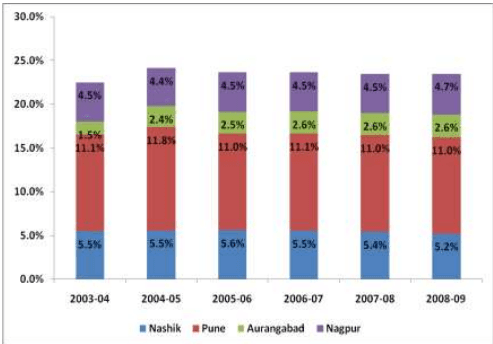
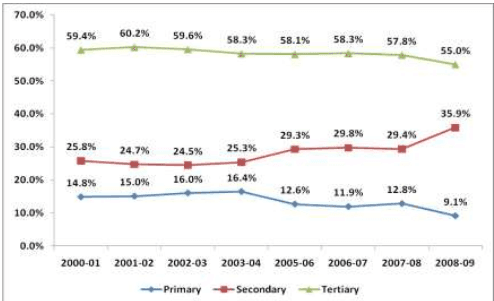
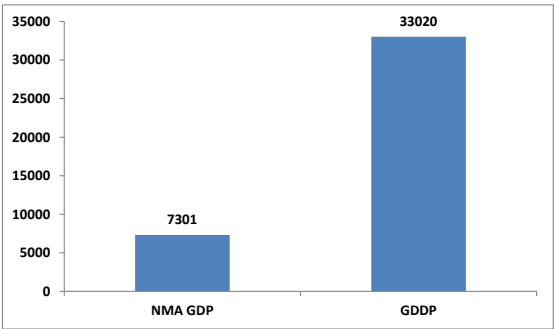
Nagpur district’s GDDP is estimated to be Rs. 33,020 crore in 2009-2010; the district contributes 5 percent to state GDP; within the GDDP of Nagpur, tertiary sector dominates with 55 percent contribution.
GDDP analysis between 2001 and 2009 reveals that the growth in the economy has largely been driven by the secondary (manufacturing and construction) and tertiary sector (services). The largest growth has been observed in the Secondary sector and more specifically in construction and allied activities which have grown at a CAGR of 23 percent and 20 percent respectively during this period. Manufacturing has grown at a CAGR of 19 percent for the same period. This clearly indicates that Nagpur city has been the key economic driver over the past few years since most of the construction activity is happening in and around Nagpur city and most of the manufacturing units are also concentrated in and around Nagpur city.
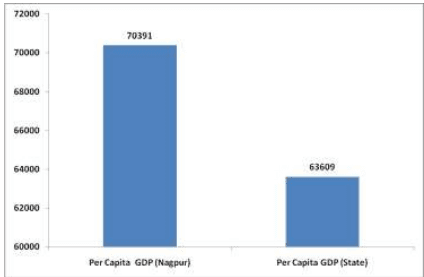
Per capita GDP of Nagpur district at Rs. 70,391/- which is higher than that of the state at Rs. 63,609/- (for 2009-2010).
Using the per-capita GDP, NMA’s contribution to GDDP works out to be approximately 22 percent.
5-39
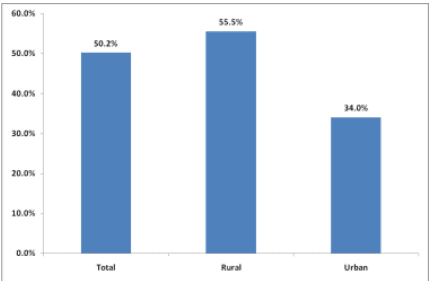
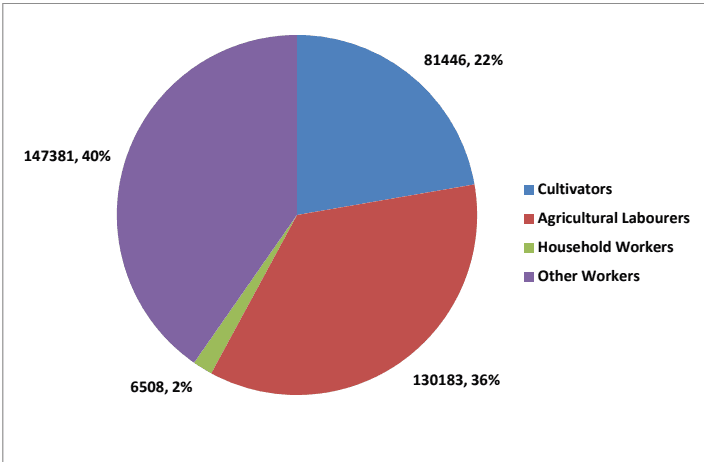
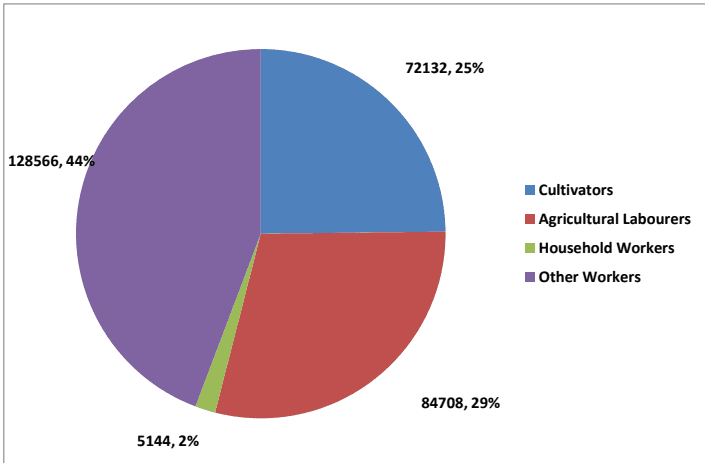
Workforce participation rate in NMA is 50.2 percent with a rural WPR of 55.5 percent and urban WPR of 34 percent within NMA, 58 percent of the workforce is employed in agriculture sector; tertiary sector employs roughly 40 percent of the workforce.
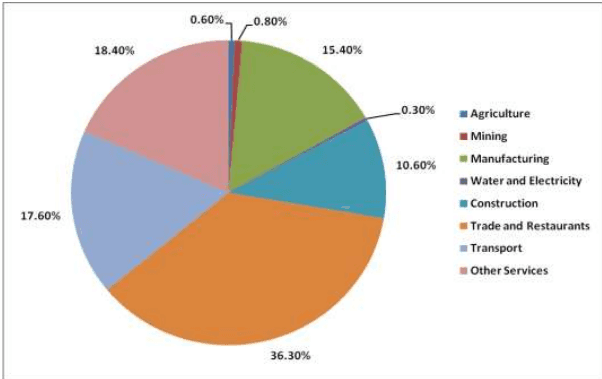
Nagpur city is a key growth driver for the district; 72 percent of workforce in the city is employed in the tertiary sector; trade, hotels and restaurants employ roughly 36 percent of the entire workforce in the city.
The Nagpur city is classified under the Group D or in other words one of the lesser developed areas of the state. All other tehsils of the Nagpur district are classified under Group D+ or as areas with least amount of industrial development. This speaks volumes about the state of the economy in the Nagpur region which appears to not have grown at an equal footing as compared to other parts of the state despite having several factors that can work in its favour.
According to the 5th economic census of 2005 for Maharashtra, Nagpur district had 209,490 enterprises (4.4 percent of the state) which employed roughly 516,166 persons (4.8 percent of the total employment in the state). According to the district statistical abstract (DSA) of 2010, the total enterprises in the district are 211,049 and the total employment in these enterprises is 545,388. The enterprises in the district have grown at a CAGR of 0.15 percent between the economic census, 2005 and the reporting by DSA in 2010, while the employment has grown at a CAGR of 1.1 percent.
If we analyze the growth of enterprises and employment in Nagpur, it becomes evident that both have increased at a CAGR of only 4 percent. This indicates that the growth in enterprises and thereby employment has been rather slow.
There are several industrial estates established by the MIDC within NMA. Butibori estate is the largest with a total area of over 2,300 hectares. The total area under industrial estates within NMA is a little over 3,500 hectares.
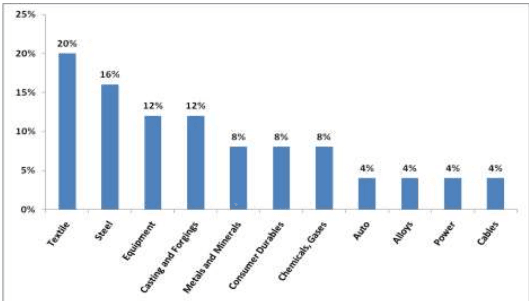
Investment in large scale industries within Nagpur district is rather moderate with an estimated figure of Rs. 7,463.64 crore and provides employment to over 58,000 persons. Within the large scale units, at the NMA level, Textiles and Steel production dominate the large scale industries’ set up. The other key industrial activities are that of equipment manufacturing and forging.
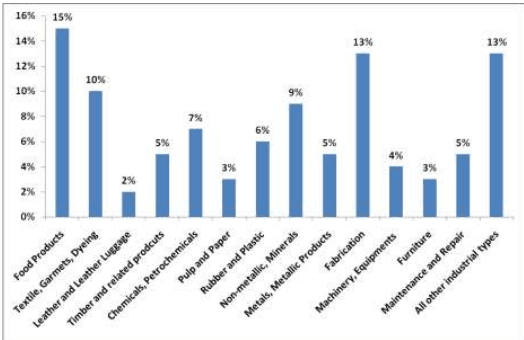
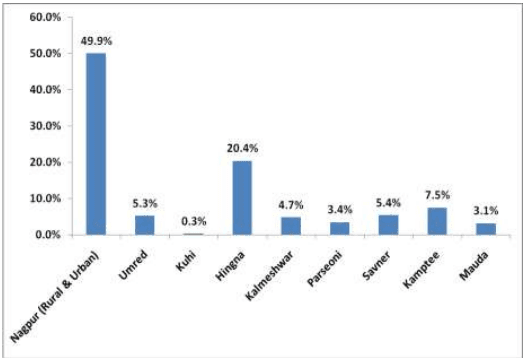
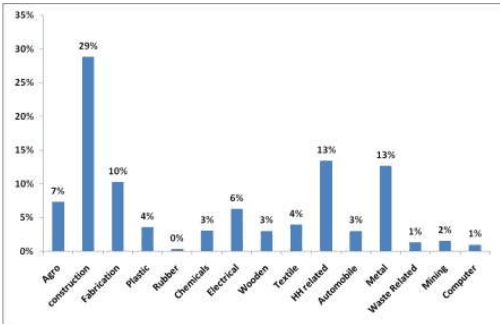
A total of 7,774 MSME units are operational within NMA. A large proportion of these are concentrated in Nagpur (rural and urban) which forms a share of 50 percent of at NMA level. Hingna constitutes the second highest share with 20 percent. Within NMA, highest MSME investments have been witnessed in Hingna. The total investment in these units is a little over Rs. 9,300 crore. The MSME sector is dominated by food products, fabrication and textile related units. Within NMA, construction, household and metal related units are dominant.
Growth in the IT sector in Nagpur has been very limited. Over the past 10 years, only 92 entities have set up operations in Nagpur based on the statistics available from STPI. The overall software and related exports from Nagpur totaled to Rs. 144 crore for the year 2010-2011. Nagpur’s share of overall software exports of Maharashtra works out to be mere 0.3 percent to 0.4 percent.
5-40
Within the manufacturing sector, Nagpur witnessed FDI worth Rs. 492 crore in 2009-2010. Additional investment commitments of Rs. 5,500 crore have been made spread across 140 large scale units with a proposed employment for over 25,000 persons in and around Nagpur.
Several other investment commitments have been made in the Nagpur region9; the total proposed investments are to the tune of approximately Rs. 68,000 crore; almost 79 percent of these investments are in the power sector due to the availability of coal in the district.
MIHAN is expected to be a key growth driver for NMA. MIHAN is proposed to be developed over an area of 4,025 hectares. It involves Airport expansion at an estimated cost of Rs. 3,150 crore. Total investment expected within MIHAN is Rs. 40,000 crore in SEZ.
The expected total employment generation by 2018 is expected to be roughly 120,000 direct jobs. The SEZ proposed in an area of 2,086 hectares will comprise of IT parks, dedicated power plant, health city, value added, export units, rail / road logistic hub, international school, pharmaceuticals, food processing
Logistics entities like Deccan 360, Future Supply Chains, Safe Express, SICAL have committed investments in MIHAN. However, the development of their facilities has not been happening due to various reasons.
One of the key reasons being cited for the slow growth observed in MIHAN is that there have been administrative delays at various points during the implementation of MIHAN. The other reason being cited is the general global economic slowdown which is impacting the expansion plans of various companies who have committed investments in MIHAN.
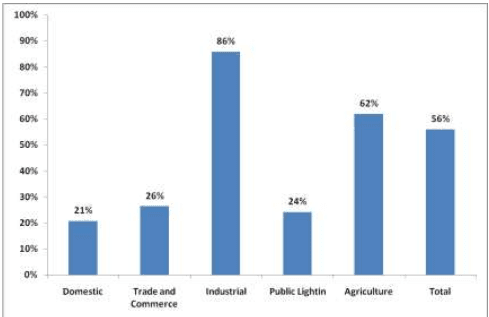
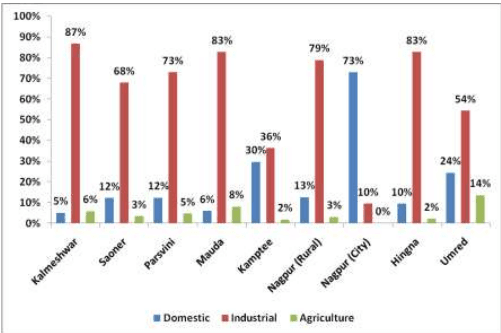
NMA consumes roughly 56 percent of the total electricity of Nagpur district; electricity consumption in the Industrial sector is highest in Hingna, Nagpur (rural), Kalmeshwar, Saoner and Mauda.
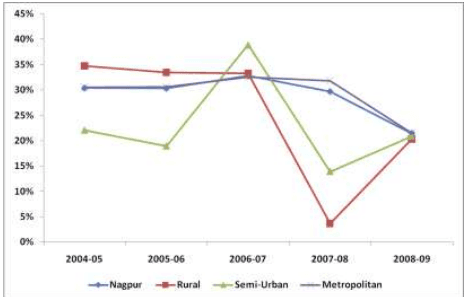
The credit off-take growth has witnessed a rather volatile trend in the district; the overall credit off-take at the district level as well as at the Nagpur city level has declined over the past couple of years. Credit offtake has sharply risen for rural and semi-urban areas in the past one year (2008-2009) after witnessing a sharp decline in the previous year (2007-2008).
Tourism also can become a key growth driver for the region since there are several tourist attractions already present in and around Nagpur.
9 Region may refer to a large agglomeration of Nagpur, Wardha, Gadchiroli etc.
5-41