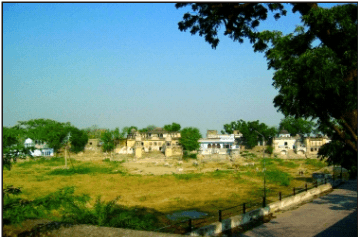
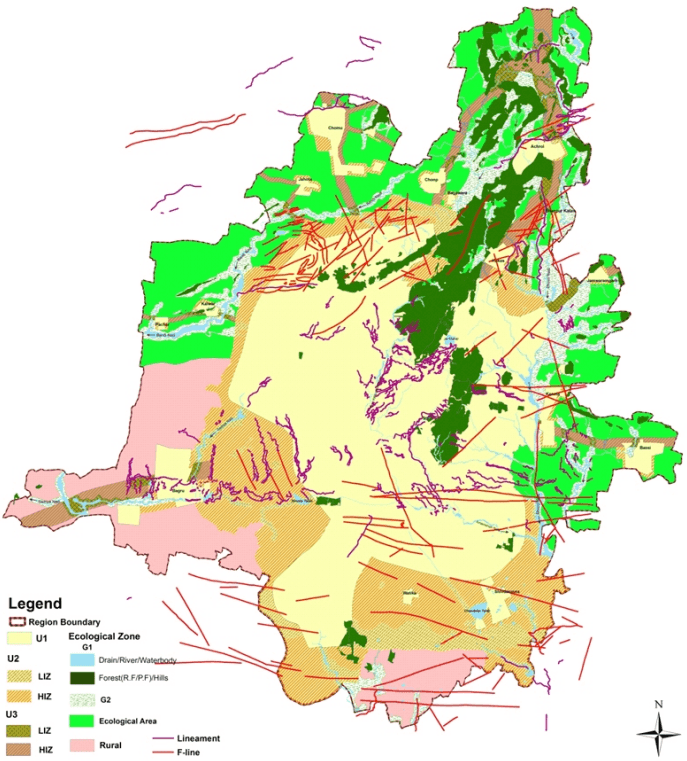
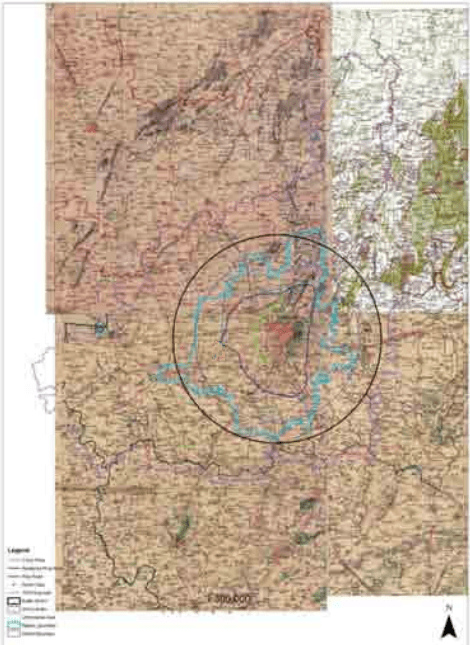
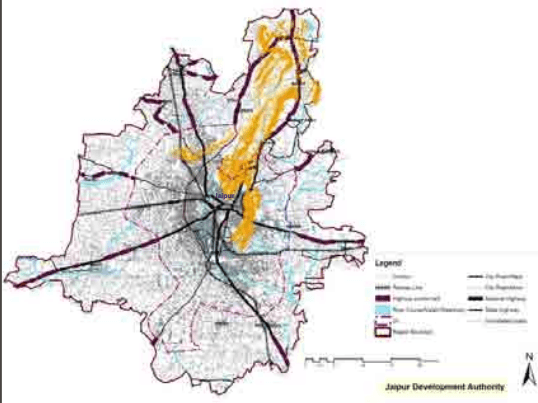
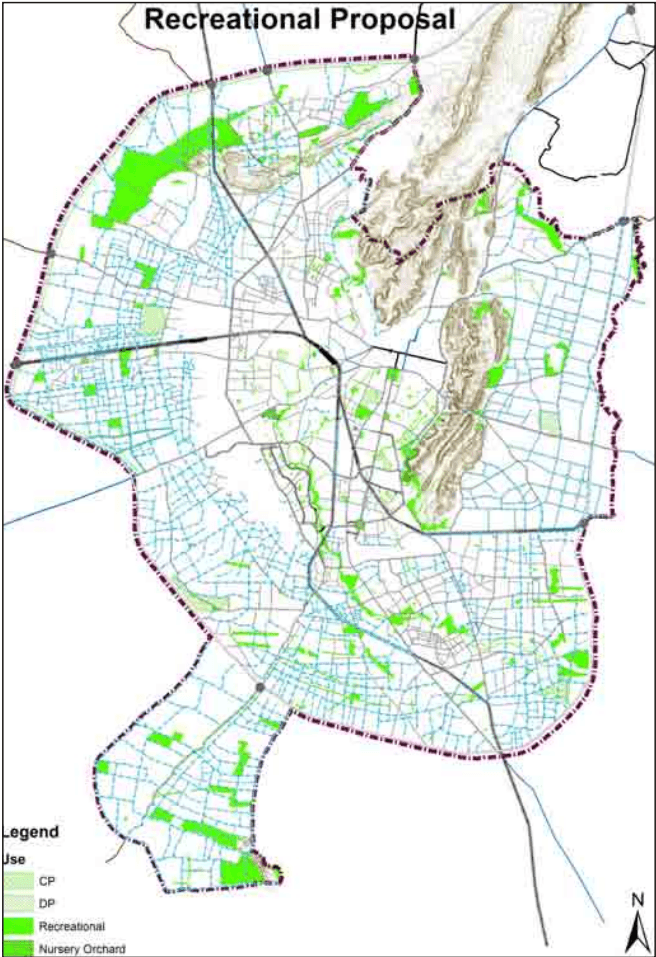
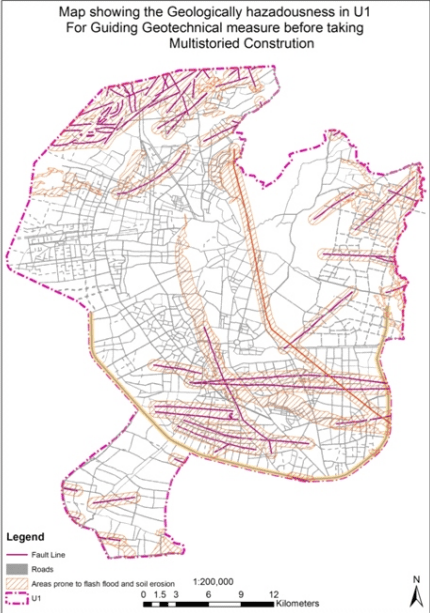
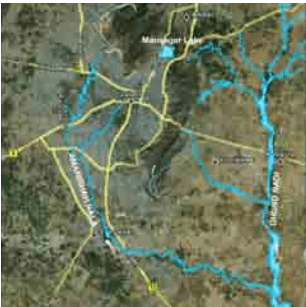
Younger flood plains of ephemeral rivers viz; The Dhund, Jhalana Nadi, Amanishah nalla, Ratanganga, Sedriya Nadi and Bandi Nadi are flowing through the Kanauta Jaipur Kalwar segments of Jaipur region. These areas are prone to flash flooding during heavy or persistent rains in their catchment's region. In these Dhund river and Amanishah Nallah covers major part of region. The Dhund River flows east of Jaipur urban area and is controlled by north-south neotectonic lineament and has unpaired fluvial terraces, preserved mostly on and along the left bank of the river. These terraces are presently cultivated. At present there is no urban encroachment on the Dhund River channel and its flood plain.
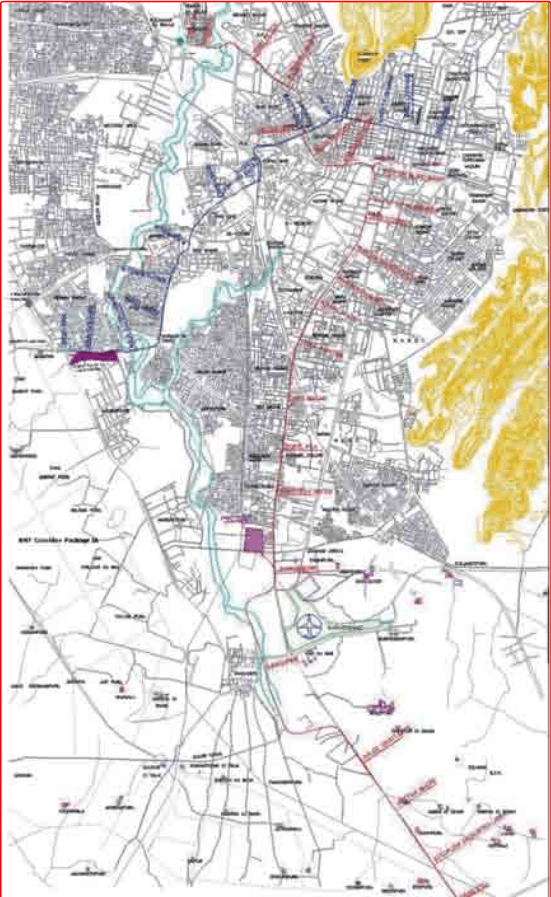
The Amanishah nalla flows in the central part of the Jaipur region. It originates from north of Mahalbag in the Amer reserve forest area. It has about 50 km long stretch from Mahalbag to about 250 m east of Relawate where it meets in the Dhund River. It has
witnessed encroachments on its flood plain
from its originating upper catchment area to its confluence with the Dhund River, SE of Goner. It has been shifting its course east and westwards, this delineated vulnerable zone may be considered as threat zone at times of flash floods.
The upper segment of Amanisha nallah is characterized by semicircular path with intense gully erosion and 15 m to 22 m bluff section along its right bank. The upper and middle segments of the nallah from 250 m south of Sejoriya to south of Sanganer have witnessed maximum encroachment from
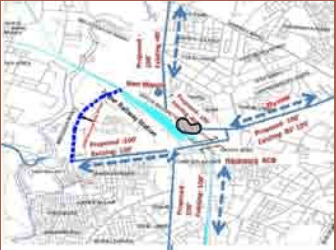
residential and industrial settlements and cultivation of seasonal vegetables and cash crops in the nallah bed. However, a small segment of nallah from north of Dehar Ka Balajee to NW of Jaipur Railway Station, which passes through Military cantonment area, is free from encroachments.
Few morphological changes have been observed in the flow path of the nalla from the year 1868 to 2008 AD. These morphological changes are in the form of increase in sinuosity, marginal increase in length of the flow path and at places straightening of the nalla course. These changes may be attributed to silting of nalla bed and human/ urban encroachments in the younger flood plain of the river. Amanishah nallah was the lifeline of Jaipur and was a perennial water flow, which was greatly reduced during summer months. Now there is hardly any water in this except in a few stretches.
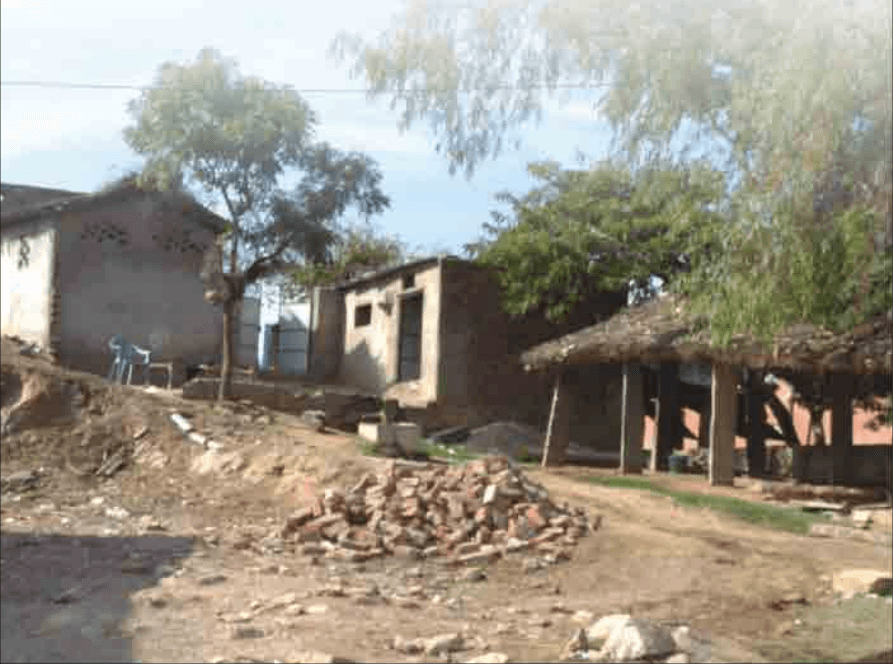
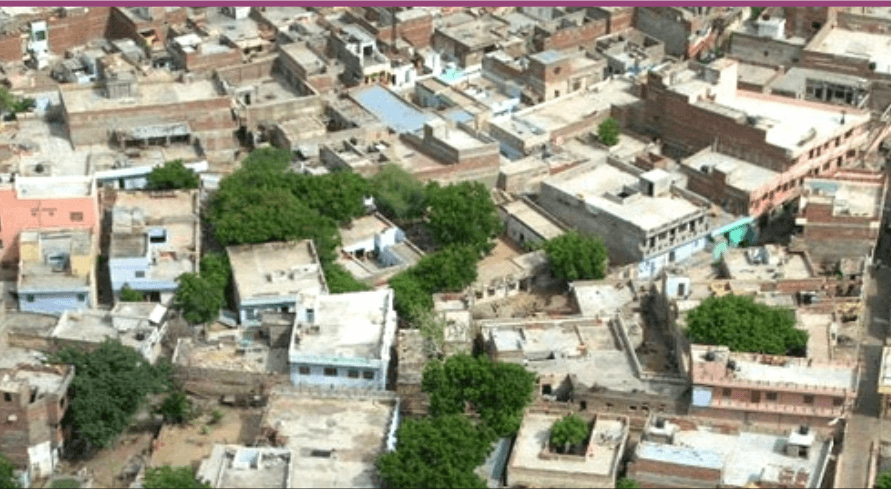
The river is ephemeral and shrunk to a small nallah at many places due to encroachments in its younger flood plain. Amanishah nallah passes through densely populated part of Jaipur region. Surface run-off from severely degraded Amer reserve forest and intense gully erosion of areas in upper catchment of Amanisha nallah bring silt in the Amanishah nalla. Besides the silt from eroded/degraded hills, the nallah also receives municipal waste, sewage, garbage and untreated industrial effluents from Vishva Karma Industrial (VKI) area; Jhotwara Industrial area, Baisgodam Industrial area, Sanganer textiles tie and dye industries, etc. Encroachments by residential units, marriage gardens and industrial activities have severely damaged the ecology of once Perennial River. At places the width of channel is barely 12 to 15 m. This possesses severe threat to life and public property in the form of large scale encroachment and flash floods.
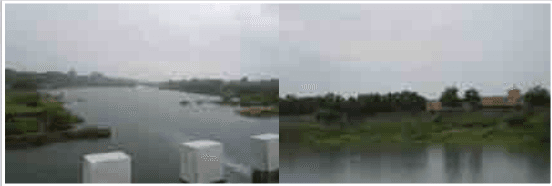
Hence, for removal of encroachments on river sides and develops the river front it is required to take various measures.
- Removal of encroachment to take various measures to develop, detailed project shall be prepared.
- Complete ban on disposal of untreated waste in the river should be imposed.
- Planned efforts to be made to check the accelerated run-off and movement of silt from surrounding degraded hills and gully erosion prone areas.
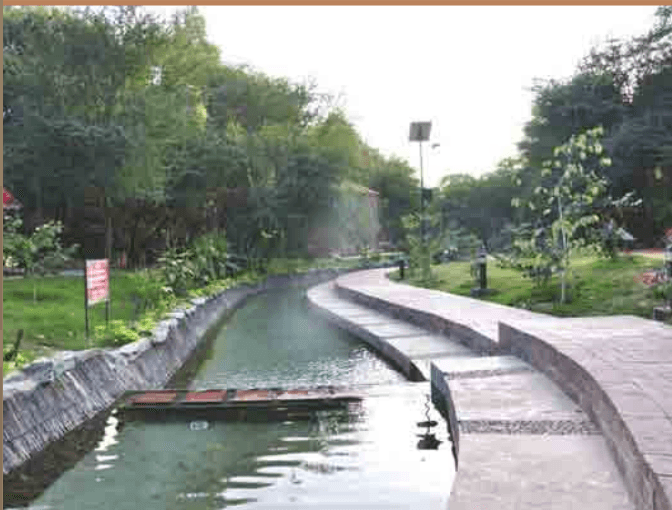
- Further encroachments of younger flood plain of river should not be allowed by putting a wire fence and construction of training parapet wall with a service lane (traverse road) and green belt of plantations all along.
- The gully erosion areas in Amer hills need to be revegetated and existing dams and reservoirs along the river be revived/ desilted and few more dams/reservoirs be made by constructing dykes / small dams / reservoirs.
- Shifting of textile tie and dye industry from Sanganer to other appropriate site as per PCB norms.
- Water harvesting through abandoned dug wells, dug cum bore wells and bore wells to revive and rejuvenate the river system.
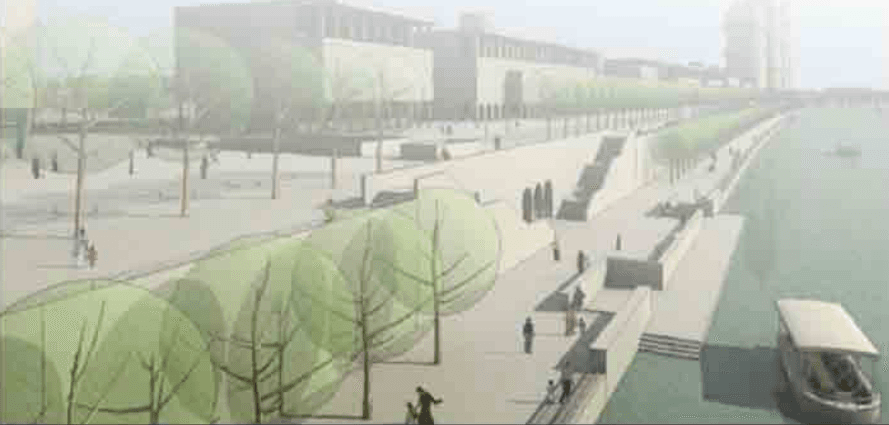
- Green belt plantations of trees and green recreation walkways need to be developed on both sides of the rivers to protect it from encroachments. This will ensure prevention of loss of life, property and groundwater contamination by industrial and sewage waste disposal.
- Controlled agricultural activity in the form of growing vegetables/ cash crops and flowers may also be allowed in the nallah bed to meet the growing demand of these commodities and depleting ground water table.
- Water carrying channel be kept free from any obstruction/ encroachment. Direct disposal of untreated effluents/ solid waste in the channel should be discouraged/ banned.
- Amanisha Nala from area west of Kishenbag, and South-East of Sanganer, passes through city area and is densely populated. It is vulnerable track for consequent damages of seasonal and rare flash flooding. The active channel course in this segment of Amanishah nala must be cleaned from any human encroachments and frequent desiltation of Nala should be carried out for natural unobstructed flow of drainage water.
These measures would ensure free flow of clean water in the river with increase green cover and it will also add to scenic beauty, provide fresh air to its citizens and will augment ground water recharge in the region. It is also likely to act as added tourist attraction and vibrant lifeline for Jaipur Region.
CHAPTER