Government of India plans to develop a Dedicated Freight Corridor (DFC) linking Delhi, Mumbai, Kolkata, and Chennai. The proposed DFC passes through six states in India, of which, Gujarat accounts for 38% (564 Km) of total DFC length (1483 Km). The influenced area of 150 km on either sides of DFC is being developed as 'Delhi Mumbai Industrial Corridor' (DMIC).
Almost 62% of the total area of Gujarat (18 out of 26 districts) would be benefited by DMIC development.
The State government has identified 82 links in the DMIC Influenced area to upgrade them into two/four lane carriageway offering connectivity between ports, industrial estates, hinterlands, markets and points of agricultural produce.
SURAT URBAN DEVELOPMENT AUTHORITY |
Page
|142
13.2State Government Initiatives
The State Government of Gujarat published revised industrial policy to promote industrial activities in the state subsequently in 2003 and 2009. The basic aim was to create an atmosphere which should inspire investors to think of Gujarat as investment hub by availing information and facilitating investment friendly state through reincarnation of district industries centers and facilitation at state level. The state has had a proven track record of attracting high volumes of investment and as a result, becoming the most favored investment destination in India.
SURAT URBAN DEVELOPMENT AUTHORITY |
Page
|135
2017
Industrial policy of 2003 was focused to provide infrastructure and empower the industrial estates, promoting better quality of life in urban areas, human resources development, labour reforms, environment zoning and mapping, Carbon Credit Exchange Program compensation, promoting agro processing industries, cluster development approach, assistance for technology upgradation, Technology Acquisition and Patent Tracking Fund, Quality Upgradation Scheme, investment for employment in sectors of textiles, apparel parks, Gems and Jewelry parks; market development and promotions, power sector reforms, tax reforms, rationalization in charges and duties with monitoring mechanism.
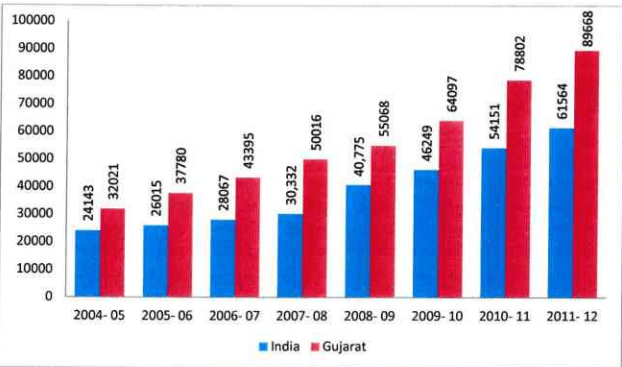
Later in 2009, the New Industrial Policy for the state of Gujarat took into account the context of the current global meltdown. Given the strong and accelerated growth and development exhibited by the state over the recent years, Gujarat is expected to be one of the key drivers for growth in the Indian economy. Gujarat has achieved tremendous growth in the industrial sector and as a result, has emerged as one of the leading industrialized states in India contributing nearly 16.1%3 to the country's industrial output. While Gujarat accounts for 4.99% of India's population, its share in the country's GDP for the year 2011-12 [at constant (2004-05) prices] is 7.61%. Gross State Domestic Product (GSDP) at factor cost at current prices in 2011-12 has been estimated at Rs. 6,11,767 crore registering a growth of 15.3% over the previous year. GSDP at factor cost at constant (2004-05) prices, in 2011-12 has been estimated at Rs. 3,98,884 crore showing an increase of 8.5% during the year. The share of primary, secondary and tertiary sectors is 21.8%, 36.1% and 42.1% respectively to the total GSDP in 2011-12. Gujarat has also registered an increase of 13.8% in the per capita income for 2011-12, which has been estimated at Rs. 89,668 as against Rs. 78,802 in 2010-11, at current prices.
Figure 51: Per Capita Income
The development, in the state has always been a policy-led inclusive development approach which has eventually attached a very high importance to the need for ensuring sustainable development. The new Industrial Policy would therefore capitalize on the inherent entrepreneurial characteristics
Page
of the State. The new Industrial Policy in addition to addressing a wide range of areas of intervention, would also give adequate thrust to ensuring holistic development in the state.
The policy of 2009 mentions the Vision of GoG as "Gujarat aspires to become a beacon of comprehensive social and economic development". The primary policy objectives are as under: (1) Facilitate investments in the state, (2) Employment generation and Employability enhancement and (3) Adherence to high quality standards. The policy thereby indicates the necessary provisioning and the facilitation which would be made by the Government departments and through private entrepreneurs under Public Private Partnership (PPP) framework in the area of facilities like power, water, gas, road, railway, port connectivity, communications, quality human resources in adequate number etc. Since choice for investment is also directly governed by factors of overall physical and social quality of life in the State, adequate interventions have been planned and proposed therein for the purpose.
For the Twelfth Plan period, Gujarat's development vision will be guided by continued emphasis on human development and inclusive growth, while aiming at sustainable double digit growth which is environmentally sustainable with harmonious and balanced development in agriculture, manufacturing and services. Other objectives of the State are:
- Increased livelihood opportunities
• Empowerment of the youth and women
- Improved quality of life, especially of the poor - both in rural and urban areas
• Good governance and improved citizen centric services
- Improved effectiveness, efficiency and transparency in programs directly aimed at the poor
- Meeting the challenges of urbanization especially in terms of infrastructure, services and governance
- Decentralized Planning through ATVT (grass-root level planning and taluka-centric developmental governance), and
- Focused attention on balanced regional development through the State's three flagship programs
Chapter 13Trade, Industries and Commerce
13.1 Urban Economy
Surat city has been an important hub for economic activities since ages. In early times, the city was well known as a 'Port town' and dealings for import and export were through Surat. Portuguese, British and other European countries had establishments in Surat. Today, Surat urban agglomeration accounts for 8% of the State's total population. Industrial development in Surat district is attributed to the presence of a large number of diamond processing, textiles and chemical and petrochemical industries. It processes 10 out of out of 12 varieties of diamonds in the world contributing to Rs. 45,000 crore, which is approximately 65% of the total diamond exports from India.
Surat is also known as 'Synthetic Capital of India', hosts over 65,000 power looms and provides over seven lakhs jobs in the district. Surat has been very successful in attracting a sizable amount of Foreign Direct Investment in various sectors like energy, oil and petroleum. A significant investment of Rs. 3,000 crore (726 million USD) in Hazira terminal project is one of the largest Greenfield FDIs in India.
There are over 41,300 small and medium industries functioning in the district. Some of the main industries are Textiles, Chemicals, Dying and Printing, Diamond Processing, Zari (silver) making, and; engineering and related activities (including manufacturing machines and equipment). Maximum number of (nearly 24,000 units) in small and medium enterprises is related to textile industry in the district followed by repairing and service industry with more than 11,000 units. Most of the small scale industries are located in Choryasi (Western Surat), Mangrol and Olpad (Northern Surat), Mandvi (Central Surat) and Palsana (Southern Surat) tehsils of the district.
Surat has a domestic airport which is well connected to different metros. It has daily flights to Delhi, Jaipur and Ahmedabad. Government of Gujarat has also undertaken an aviation master plan for the state which prioritizes development as well as upgradation of Surat airport. The other nearest airports are Mumbai, Vadodara and Ahmedabad. The upgraded Surat airport is envisaged to offer direct air connectivity to important destinations in India and abroad. This is expected to boost commercial activities in the city as well as in the district, leading to upsurge in the demand in hospitality sector, which is primarily driven by the corporate tourism.
Emergence of a petrochemical complex, gems and jewelry Park and the centrally promoted Surat SEZ are expected to further fuel the industrial and economic growth of the city. The expansion plans of Hazira port is envisaged in two phases. The first phase the development of port infrastructure to handle Liquefied Natural Gas (LNG) imports, and the second phase would offer port facilities for handling dry bulk and containerized cargo. The port facility would help in attracting sizeable investments in the coming future.
Magdalla and Hazira ports in Surat have good rail and road connectivity. Magdalla port is only 2 km away from the state highway and 15 km away from NH-8. Hazira port in Surat, has close proximity to the high speed dual carriageway which is under construction. The port is well connected with main Mumbai-Delhi Freight Corridor is expected to be a major driver for the industrial growth Hazira port.
SURAT URBAN DEVELOPMENT AUTHORITY |
Page
Hazira is known as the 'Gateway Port' to serve the hinterlands of North, West and Central India as it is situated in the midst of one of the most industrialized area in the country. It is deep water, all weather and direct berthing port in Surat. The existing industrial portfolio of Hazira includes industrial activities such as petrochemicals, fertilizers, heavy engineering, steel, energy and port related activities. More than 20 large and medium companies are located in Hazira, including Bharat Petroleum Corporation, Cairn Energy, Essar Power, Hindustan Petroleum and Larsen & Toubro, Reliance, NTPC among others. Shell has established an LNG Terminal at Hazira in 2004.
Magdalla port situated on the western coast of India in Southern Gujarat about 16 km upstream of Tapi river is a lighter age port. Magdalla port is only 2 km away from the state highway and 15 km away from NH-8. The nearby broad gauge railway line and Surat railway station are 15 and 16 km respectively away from the port. The port is well connected by road with Rajasthan, Madhya Pradesh, and North Maharashtra which are hinterland area to the port.
The urbanisation trends in India are a direct reflection of the structural changes that are taking place in the economy. The combined contribution of industry and services to GDP is significantly higher than that of agriculture. The urban areas are likely to play an increasingly important role with the continuing liberalisation of the economy. Much of the growth of the economy will come from economic activities that are likely to be concentrated in and around existing cities and towns, particularly large cities. Cities with transport and telecom linkages with global economy, are the preferred destinations for investments. However, there is inadequate recognition of the role that cities play in economic development. The cities need to be supported with improved planning and infrastructure to accommodate growth, better governance and management.
Surat ranked 9th in India with GDP of $40 billion in the Financial Year 2011-12, which was $14 billion in 2010. The per capita GDP which was $8000 in 2010. Surat is known for diamonds, textiles and recently for diamond-studded gold jewelry manufacturing. Surat registered GDP of 11.5% for seven fiscal years from 2001-2008 which was the fastest growing GDP in India. The City accounts for:
90% of the world's total rough diamond cutting and polishing,
99.99% of the nation's total rough diamond cutting and polishing,
90% of the nation's total diamond exports,
40% of the nation's total man made fabric production,
28% of the nation's total man-made fibre production
18% of the nation's total man-made fibre export, and
12% of the nation's total fabric production.
13.3Economic Activities in Surat Urban Agglomeration
Historically, Surat was a port town and in early days, it was the main hub of trading with the European nations. Over a period of time, Surat lost this identity however, the topography, linkages and atmosphere has attracted a number of investors, traders and industrialists. Later, the hand woven Zari works gained fame at global level followed by establishments of synthetic cloth, diamond cutting and polishing and allied industries. Increasing population has boosted the real estate market with its sub-sectors.
In the year 2000, it was reported by the Directorate of Economics and Statistics, Government of Gujarat based on The Fourth Economic Census, 1998 that Ahmedabad district accounted for nearly 12% in the State total enterprises, which is the highest among all the districts. The district-wise percentage share of enterprises in State total aggregate is varying between 5% to 10% for each of
SURAT URBAN DEVELOPMENT AUTHORITY | Page |137
- C C C C C C C C C C C C C C C C C C C C C C C C C C C C C C C C C C C C C C C C C C C C C C C C C C C C C C C C C C C C C C C C C C C C C C C C C C C C C C C C C C C C C
2017
the districts with Rajkot (6.09%), Mahesana (6.80%) Sabarkantha (6.49%), Kheda (6.59%), Anand (6.66%), Vadodara (5.52%) and Surat (9.56%). Interestingly, Surat is ranking Second position in sharing the enterprises established in the Gujarat state. Further, the quarterly review of Gujarat Economy, 2011 discusses the district-wise details of Micro, Small and Medium Enterprises. The document reveals that during the period of 01-07-2011 to 30-09-2011 Surat district registered with 5,914 Micro, 386 small and 17-Medium enterprise with subsequent employment to 32174, 7204 and
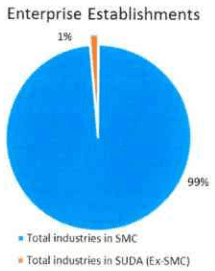
Figure 52: Enterprise Establishments in SUDA
1286 workers respectively.
Based on the records from the District Industries Commissioner (DIC) and the Gujarat Industrial Development Corporation (GIDC), an analysis was performed on the overall industrial/commercial units that has been established in Surat till year 2012. The analysis reveals that total Enterprises established in SUDA is 50,180 out of which within SMC limits are 49,437 and 743 in SUDA excluding SMC area. Further, this is distributed among four blocks namely Palsana, Kamrej, Chorasi and Olpad in which this enterprise establishments are 302, 98, 23 and 330 respectively.
Following figure shows the composition and share of enterprise establishments in SUDA and SMC area which suggests that there are 99% of enterprise establishments within SMC limits and the rest is in the SUDA (Excluding SMC).
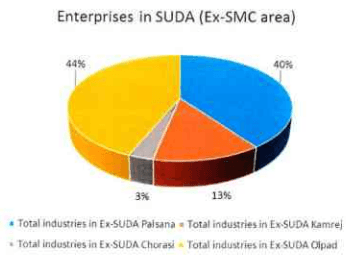
Figure 53: Enterprises in SUDA excluding SMC
Out of total enterprises established in SUDA (excluding SMC area) 40% are in Palsana, 13% in Kamrej, 3% in Chorasi and 44% in Olpad. Here, it is to be noted that the Olpad and Kamrej taluka are emerging enterprise centers whereas the Palsana has still a very good potential for development. Further, there are additionally, 753 enterprise establishments in the peri-SUDA area within these four taluka boundaries under the Surat District.
Surat urban agglomeration has a variety of trading, commercial and industrial establishments. Lowest sex ratio in the Gujarat state shows a significant presence of male workers in the urban area. In addition, the 39% of population in the city belongs to the main worker category of Census of India, 2011 for Surat urban agglomeration.
SURAT URBAN DEVELOPMENT AUTHORITY |
Page
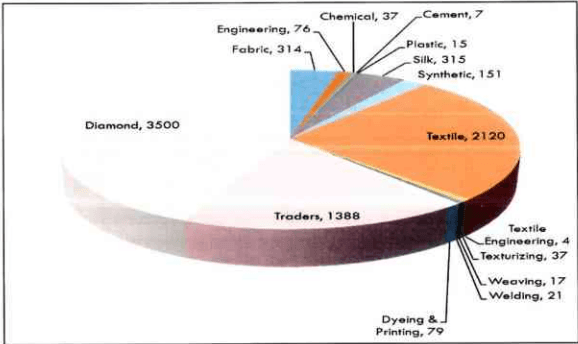
Figure 54: Established industries
Source: SGCCI, 2012-13
As shown in table below, the number exceeds 50,000 for economic establishments in the region with almost 18 lakhs of workers employed in different activities. Also, 14.98% of SUDA area has been marked with industrial land use followed by 3.15% of commercial land use.
Table 105Enterprise establishments in Surat
Enterprise Establishments
Nos.
In SMC
49,437
In SUDA (Ex-SMC)
743
In Ex-SUDA Palsana
302
In Ex-SUDA Kamrej
98
In Ex-SUDA Chorasi
23
In Ex-SUDA Olpad
330
Total in SUDA (with SMC)
50,180
Total in peri-SUDA area
753
The Hazira Industrial area and port is located in the northern banks of Tapi river and is adjacent to the Surat urban area. It is home to several major processing facilities/ manufacturing centers for number of establishments. In general, Surat's industrial system is a complex blend of home-based, small scale and medium scale industries largely dependent on semi-skilled and unskilled labor. Some of the major establishments around the city are Reliance petrochemicals, Essar steel, Larsen & Toubro, ONGC, KRIBHCO, Shell, ABG Shipyard, HPCL, Indo Burma Petroleum Ltd, Cairn Energy, British Gas, Ambuja Cement, Welspun, Garden Vareli, NTPC and Torrent power.
There are over 41,300 small scale industries (SSI) functioning in Surat district. Some of the main industries under SSIs in Surat are textiles, chemicals dying & printing, diamond processing, Zari
SURAT URBAN DEVELOPMENT AUTHORITY | Page | 139
- C C C C C C C C C C C C C C C C C C C C C C C C C C C C C C C C C C C C C C C C C C C C C C C C C C C C C C C C C C C C C C C C C C C C C C C C C C C C C C C C C C C C C
2017
(Silver) making and engineering and related activities (manufacturing machineries & equipment). Maximum number of SSI units (24,000 Units) are related to textile industry in the district followed by repairing & service industry with more than 11,000 units.
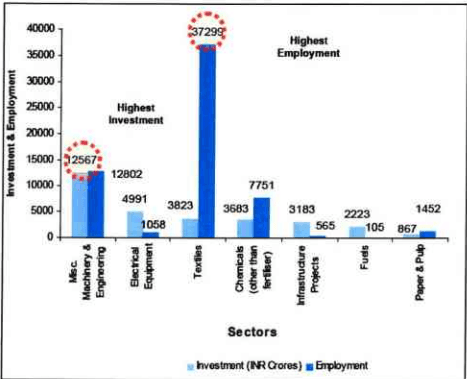
Based on the Surat District Profile 2006-07, it was reported by the Industrial Entrepreneur Memoranda (IEMs) filed that the total investments during 1988-97 were Rs. 33,251 crore (USD 7.92 billion) and I Rs. 35,975 crore (USD 8.57 billion) during 1998-2007. Around 70% of the investments during 1998-07 have been contributed by engineering, electrical equipment, textiles, chemicals and petrochemicals sectors.
Total 866 units were introduced during 1988-97, however during 1998-07 a total of 1215 new units were introduced with textile sector units having taken a lion's share of 51% in terms of new units established in last one decade.
Figure 55: Sector wise investments in Surat
Source: Surat and Tapi District Profile, Industries Commissionerate, GoG
Given India's growing population and lifestyles, the Surat textile industry is poised to grow to meet the internal as well as exports demands. The technical advantages, vocational skill development and research facilities for textiles, within the city, provide a unique opportunity for the economic growth of Surat.
The diamond industry too, has similar advantages and thus, is slowly shifting from diamond cutting to the manufacturing of Jewellery.
SGCCI has already started focusing on expansion of textiles from 'Fiber to Fashion' and 'Diamond to Jewellery' through exhibitions, research, etc. It has also set up a convention and exhibition center and special economic zones for diamonds as well as garments are taken up.
SURAT URBAN DEVELOPMENT AUTHORITY |
Page
On the western front of Surat is Hazira. Considering the unique mix of economy, considering the present conditions with niche products i.e. synthetic textiles/diamonds and due to the growing role of Hazira Industrial area, the economic growth of Surat is expected to sustain or increase over next two decades.
Following table shows details on the major sectors namely textile processing industries, diamond industries, weaving industries, chemical industries, engineering establishments, industries, embroidery and agro based industries. With Major industrial establishments in Hazira Notified Area, there are number of supporting and dependent establishments in Surat.
Table 106Glimpses of economic establishments in Surat (Part-A)
Sr. No.
Particular
Textile processing
Diamond
Weaving
Chemicals
1
No. of Units
320
3500
25000
70
2
No. of People Employee
400000
Above 400000
125000
30000
3
Current Investment
Rs. 1000 Crore
Rs. 25000 Crore
Rs. 127500 Crore
Rs. 500 Crore
4
Current Annual Turnover
Rs. 2000 Crore
Rs. 200000 crores
Rs. 54000 Crore
RS. 6000 Crore
5
Current Area Sqr. Mtr
7.43 Lac Sq. Mt.
45 Sq. km
3 million Sq. Mt.
9 lac Sq. Mt.
6
Locations
Palsana, Pandesara, Sachin, Kadodara,
Varachha, Katargam, Mahidharpura, Puna
U. M. Rd, Sachin, Pandesara, Bamroli, Unn, Udhnaudyog Nagar, Bhestan, VastaDevdi, KapodraLaskan, Limbayat, ParvatPatia, Ved Road, KatargamGIDC, Salabatpura, Sagrampura, Khatodra, Sayan, Kim, Pipodra, Jolva
C C C C C C C C C C C C C C C C C C C C C C C C C C C C C C C C C C C C C C C C C C C C C C C C C C C C C C C C C C C C C C C C C C C C C C C C C C C C C C C C C C C C C C C C C C C
2017
of Colour Cotton
Casting
Colour Cotton, Water jet, Rapier
technology, Micro-reactor
9
Future Location
Sachin - Magdalla Road
Vesu, Piplod, Pal
Delad, Gothan
NA
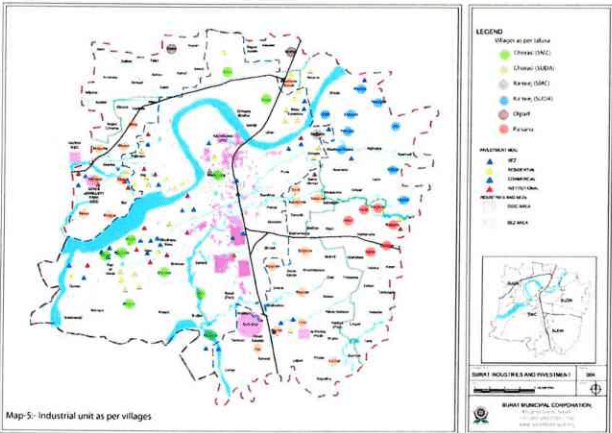
Following map shows the industrial establishments in the SUDA area.
Figure 56: Locations of industrial establishments in SUDA