The number and location of setting blocks shall be as shown in Figs. 10 and 12. Generally, setting blocks shall be,
a) positioned at quarter points or not less than from the corner, whichever is lesser;
b) the minimum width of each setting block shall be not less than the glass thickness; and
c) If a glazing bridge is used then the thickness of the glazing bridge can be added to the thickness of the setting block to achieve the minimum gap of 6 mm between the edge of glass and the framing member.
Setting blocks shall be located to equally support all panes of glass, and shall be fixed to prevent displacement during installation and service. The minimum length of each setting block (or two blocks side by side) shall be 25 mm in length for every square metre of glass area, with a minimum length of 50 mm. When wood is used as the material for setting blocks, only the seasoned ones should be used as green wood may shrink laterally (in the process of attaining
equilibrium moisture content over a period of time) and result in loosened installations.
For example, a glass area, long, that is, is the length of each setting block.
Setting blocks shall be of resilient, load-bearing, non-absorbent, rot-proof, and material that is compatible with all other glazing materials conforming to available standards (if any) that may come into contact with the blocks.
1 Setting blocks are used between the bottom edge of the unit and the frame to centralize and equally support both panes of glass.
2 Setting block width and location should not restrict water drainage.
3 Extruded rubber material with 80 - 90 shore A hardness is recommended.
4 Shaped setting blocks will be required for a glazing platform.
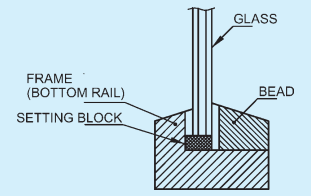
FIG. 10 POSITION OF SETTING BLOCK