To help people with diverse abilities, the controls as far as possible shall be operable by one hand and require no tight grasping, pinching or twisting of the wrist.
For persons with reduced dexterity or impaired vision, electrical switches should have large push plates.
Grab bars and door or window handles should be at least 80 mm long. Lever handles should be
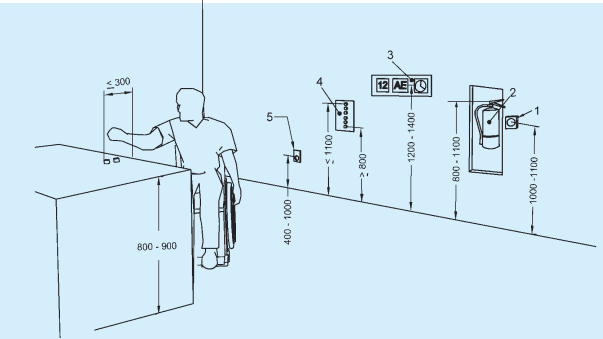
1 Fire alarm, call point
Key
2 Fire extinguisher
3 Meter indicators
4 Control devices
5 Socket outlets
All dimensions in millimetres.
FIG. 62 HEIGHTS OF SWITCHES, SOCKET OUTLETS, READING CONTROLS AND CONTROLS ON A HORIZONTAL SURFACE
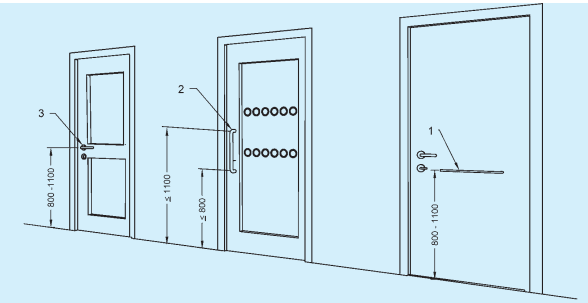
Key
1 Horizontal pull bar, toilet room door
2 Vertical handle
3 Lever type handle
All dimensions in millimetres.
PART 3 DEVELOPMENT CONTROL RULES AND GENERAL BUILDING REQUIREMENTS
FIG. 63 DOOR HANDLE TYPES AND HEIGHTS
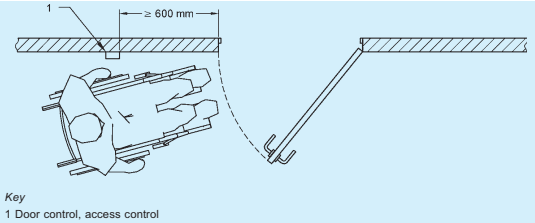
FIG. 64 POSITION OF DOOR AND ACCESS CONTROLS
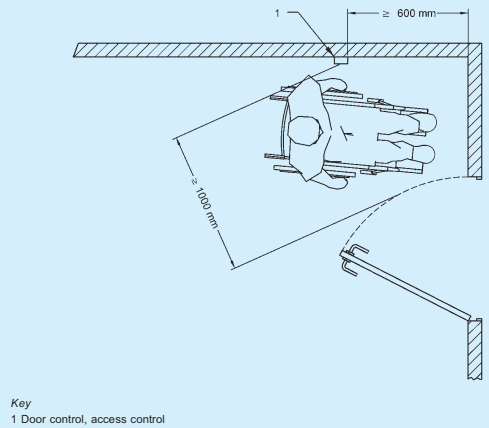
FIG. 65 DISTANCE OF CONTROLS FOR POWERED DOOR OPENERS
between 19 mm and 25 mm in diameter; 'D-Lever' handles are preferred (see Fig. 66). A vertical bar for sliding doors should be 30 mm to 50 mm in diameter. The clearance between the bar and the wall should be 45 mm to 65 mm. The backset of a latch/lock should be a minimum of 30 mm. Other door furniture should be 30 mm from the door edge. Suitable clearance should be provided between adjacent fixtures and fittings to prevent accidental operation.
Operating force on control buttons and push plates should be 2.5 N to 5.0 N. Control for drinking water
fountains shall be operable with one hand with an operative force of not more than 20 N.
B-7.5 Identification
Buttons and devices should be identified by visual contrast. Information should be in raised tactile and Braille signage. All important controls should have an integral Braille indication.
B-7.6 Usability
Control devices for different functions should be
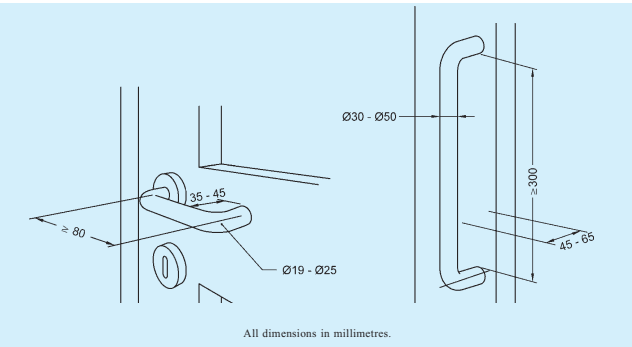
FIG. 66 EXAMPLES OF D-LEVER AND VERTICAL DOOR HANDLES
different. Control devices for similar functions should have a similar design and activation mechanism and be the same for identical functions throughout the facility.
B-7.7 Telephones
B-7.7.1 Telephones shall be on a clear accessible route with approach from the front or the side (see Fig. 67). All information should be provided in at least two of visual, oral and tactile forms. The telephone keypad shall have a tactile point on the number five (see also B-7.9).